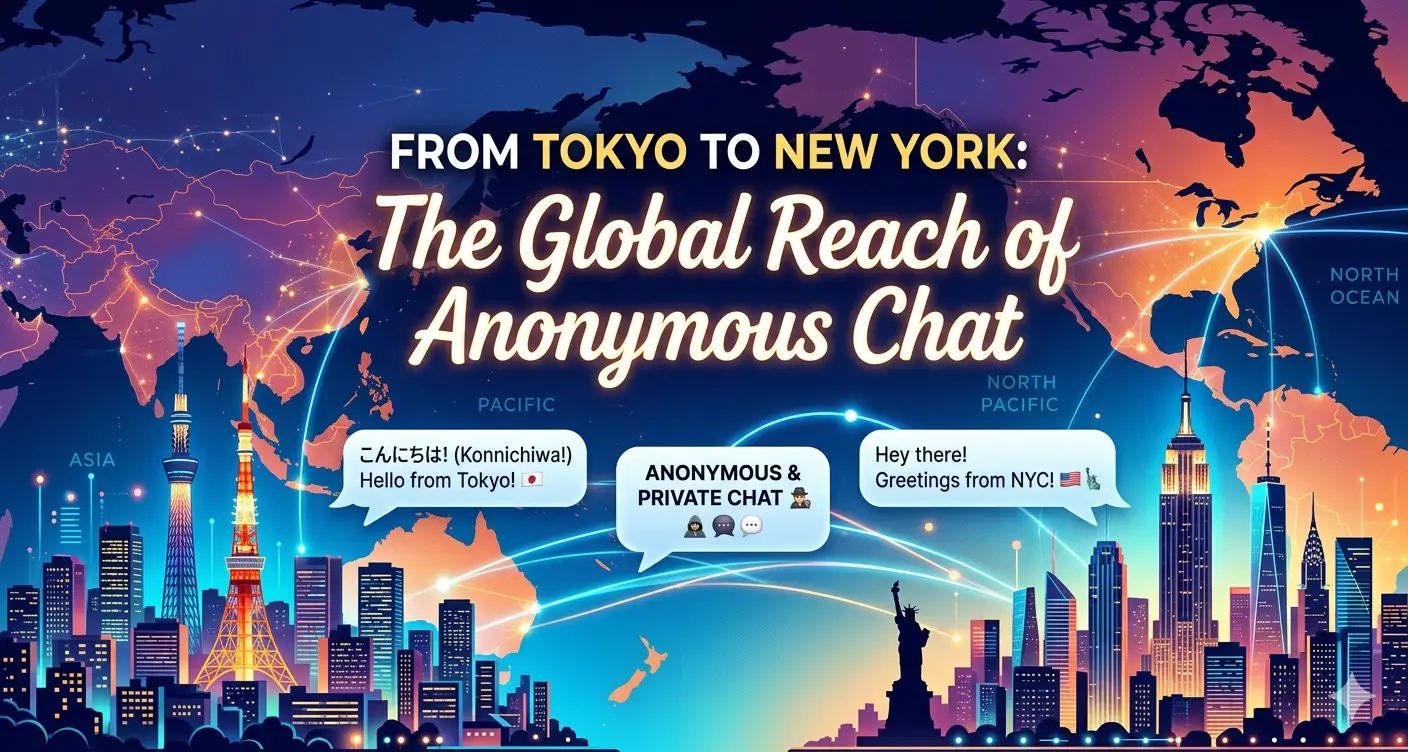
The neon lights of Shibuya Crossing and the towering digital billboards of Times Square are separated by over 6,000 miles and a thirteen-hour time difference. Yet, in the digital architecture of the 2020s, these geographic boundaries are becoming increasingly irrelevant. People in both megacities—and everywhere in between—are seeking the same thing: a genuine connection stripped of the pressures of social media curation. This desire has fueled the massive global resurgence of the anonymous chat phenomenon.
For decades, the internet promised a "global village." But as platforms grew, they became more about performance than participation. We began posting for likes, editing our lives for followers, and worrying about how a single comment might follow our "real-world" identity forever. The rise of random chat platforms is the natural counter-culture to this era of over-exposure. Whether you are a student in Tokyo looking to practice English or a professional in New York winding down after a long shift, the appeal of a blank slate is universal.
The Psychology of the Digital Mask
Why do we crave anonymity? In Japan, the concept of Honne (true feelings) versus Tatemae (public face) is deeply ingrained in the culture. The internet has historically been a place where Honne can finally breathe. Similarly, in the fast-paced, high-pressure environment of New York City, the "anonymity of the crowd" is a cherished part of urban life. Anonymous chat brings that urban experience to the palm of your hand.
When you enter a space like chathome, you aren't your job title, your follower count, or your aesthetic. You are simply a voice. This "online disinhibition effect" allows for conversations that are often more honest, vulnerable, and humorous than those we have with people we’ve known for years. It’s the digital equivalent of a late-night conversation with a stranger on a cross-country train—intense, fleeting, and surprisingly profound.
Why Random Chat is Trending Again
The current wave of interest in random chat isn't just about nostalgia for the early days of the web; it’s about modern functionality. Today’s users demand more than just a chat box. They want a seamless experience that balances spontaneity with security.
Breaking the Filter Bubble: Algorithmic social media feeds show us what we already like. A random chat breaks that cycle by forcing us to interact with perspectives we wouldn't otherwise encounter.
Combating Loneliness: Despite being "connected," global loneliness rates are at an all-time high. A quick 10-minute conversation with someone halfway across the world can provide a significant mood boost.
Low-Stakes Interaction: Sometimes, you don't want a "friendship" that requires maintenance. You just want a moment of human interaction. This is where platforms like chathome excel—they provide the connection without the commitment.
Navigating the Global Digital Landscape
From the bustling tech hubs of Bangalore to the cafes of Paris, the way people use anonymous chat varies, but the core mechanics remain the same. In Western markets, these platforms are often used for entertainment and "killing time." In emerging markets or more conservative societies, they serve as vital outlets for self-expression and discussing topics that might be taboo in local communities.
However, the global reach of these platforms also brings a responsibility for safety. The best modern platforms have moved away from the "Wild West" feel of the 2000s, implementing better community standards and reporting tools to ensure that the experience remains fun and inclusive for everyone, regardless of where they are logging in from.