The digital world moves in cycles. Just when we thought the era of hyper-curated Instagram feeds and permanent LinkedIn resumes had completely taken over our social lives, a familiar ghost from the early internet has returned: the anonymous chat. But this isn’t the chaotic, wild-west chatroom of the late 90s. This is a revival led by Gen Z, a generation that grew up with the weight of "personal branding" on their shoulders and is now looking for a way to just... exist.
If you’ve spent any time on platforms like chathome, you’ve likely noticed the shift. It’s no longer just about the novelty of talking to a stranger; it’s about reclaiming a sense of freedom that modern social media has slowly eroded.
The Exhaustion of the "Perfect Profile"
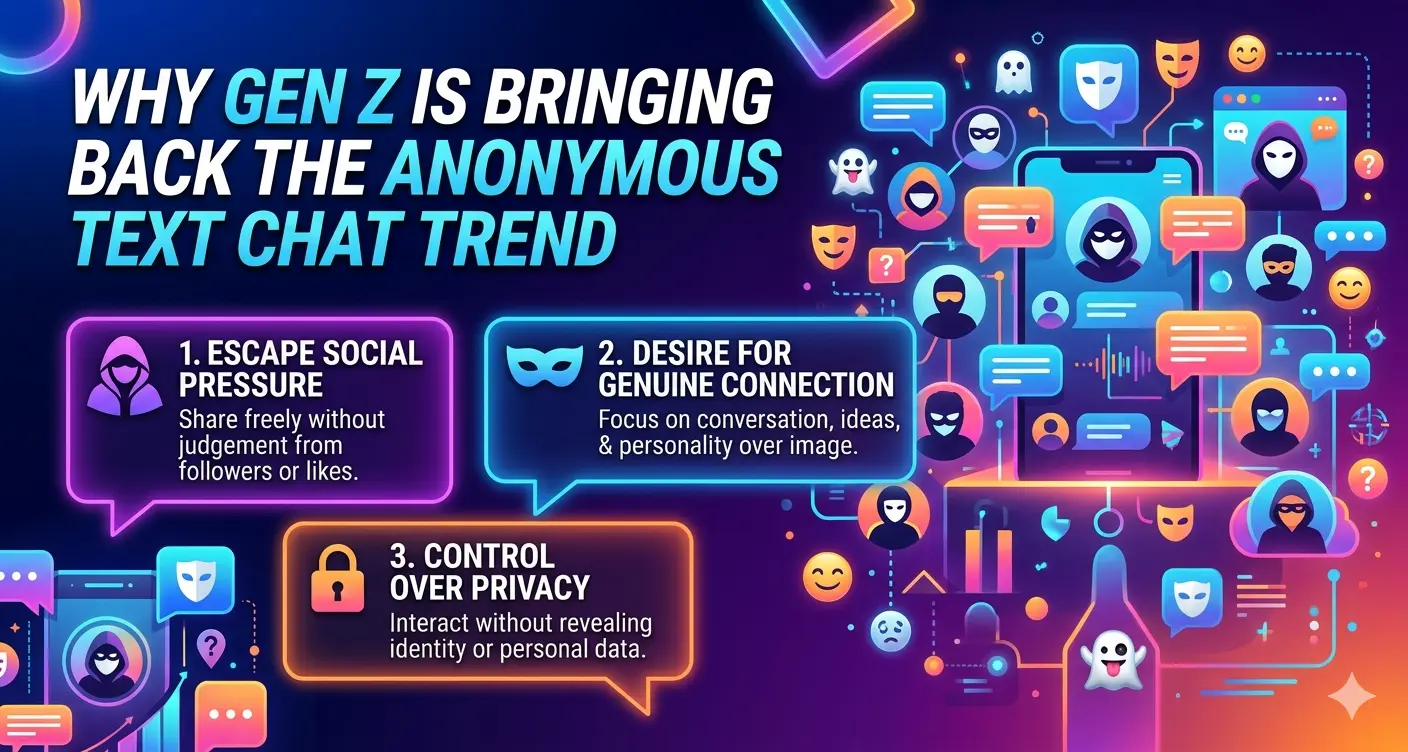
For the average Gen Z-er, social media is often a high-stakes performance. Every photo is edited, every caption is scrutinized, and every "like" is a metric of social standing. There is a deep-seated exhaustion that comes with maintaining a digital identity that is permanently linked to your real name, your school, and your future career.
This is where the anonymous text chat trend finds its strength. When you enter a random chat environment, your history doesn't follow you. There is no profile picture to judge, no follower count to maintain, and no "digital footprint" that a future employer might stumble upon. It is a space where you can be a blank slate. This anonymity acts as a pressure valve for a generation that feels constantly watched.
Authenticity Through Ambiguity
It sounds like a paradox: how can you be "authentic" if no one knows who you are? Interestingly, anonymity often leads to higher levels of honesty. On traditional platforms, we filter our thoughts to fit our "brand." On an anonymous chat platform, people tend to dive into deeper, more vulnerable topics much faster.
Whether it’s venting about mental health, discussing niche hobbies that friends "in real life" wouldn't understand, or seeking unbiased relationship advice, the lack of identity removes the fear of social retribution. You aren't "Sarah the honor student"; you are just a voice in the digital ether. This creates a unique form of intimacy—a "stranger on a train" effect—where two people can share their darkest secrets or brightest ideas simply because they know they will likely never meet again.
Breaking the Algorithm Bubble
Modern social media is designed to show you more of what you already know. Algorithms categorize us into neat little boxes, ensuring we only interact with people who share our politics, our music tastes, and our location. While this creates a comfortable echo chamber, it also makes the internet feel incredibly small.
Gen Z is using random chat tools to break out of these bubbles. The thrill of clicking "start" and being connected to someone halfway across the world—someone who lives a completely different life—is a breath of fresh air. It restores the original promise of the internet: global connectivity without borders or biases. Platforms like chathome facilitate these "micro-adventures," providing a spontaneous break from the predictable scroll of a TikTok FYP.
The Safety and Evolution of the Trend
Of course, the return of the anonymous chat trend isn't without its concerns. The older generation remembers the risks of early chatrooms. However, today’s platforms have evolved. With better moderation, AI-driven reporting systems, and a more tech-savvy user base that understands digital boundaries, the experience has become significantly more refined.
Gen Z approaches these spaces with a specific set of "unspoken rules." They are quick to skip past "low-effort" interactions and gravitate toward meaningful dialogue. For them, it’s not about being "creepy"; it’s about finding a human connection that isn’t mediated by an algorithm or a corporate ad-spend.
A Return to Mystery
Perhaps the biggest driver behind the anonymous text chat revival is the simple desire for mystery. In an age where you can Google anyone’s background in seconds, there is something incredibly romantic and exciting about talking to a stranger whose face you can’t see. It forces you to rely on words, humor, and personality rather than visuals.
The trend isn't just a nostalgic throwback; it's a cultural correction. As we move further into an era of AI and deepfakes, the value of a raw, unscripted, one-on-one text conversation with another human being is skyrocketing.
Conclusion
The resurgence of anonymous chat is a clear signal that Gen Z is tired of the performance. They are looking for spaces like chathome where they can drop the mask, stop the scroll, and engage in a random chat that feels real, even if it’s temporary. In the end, being "no one" online might just be the best way to finally feel like "someone."