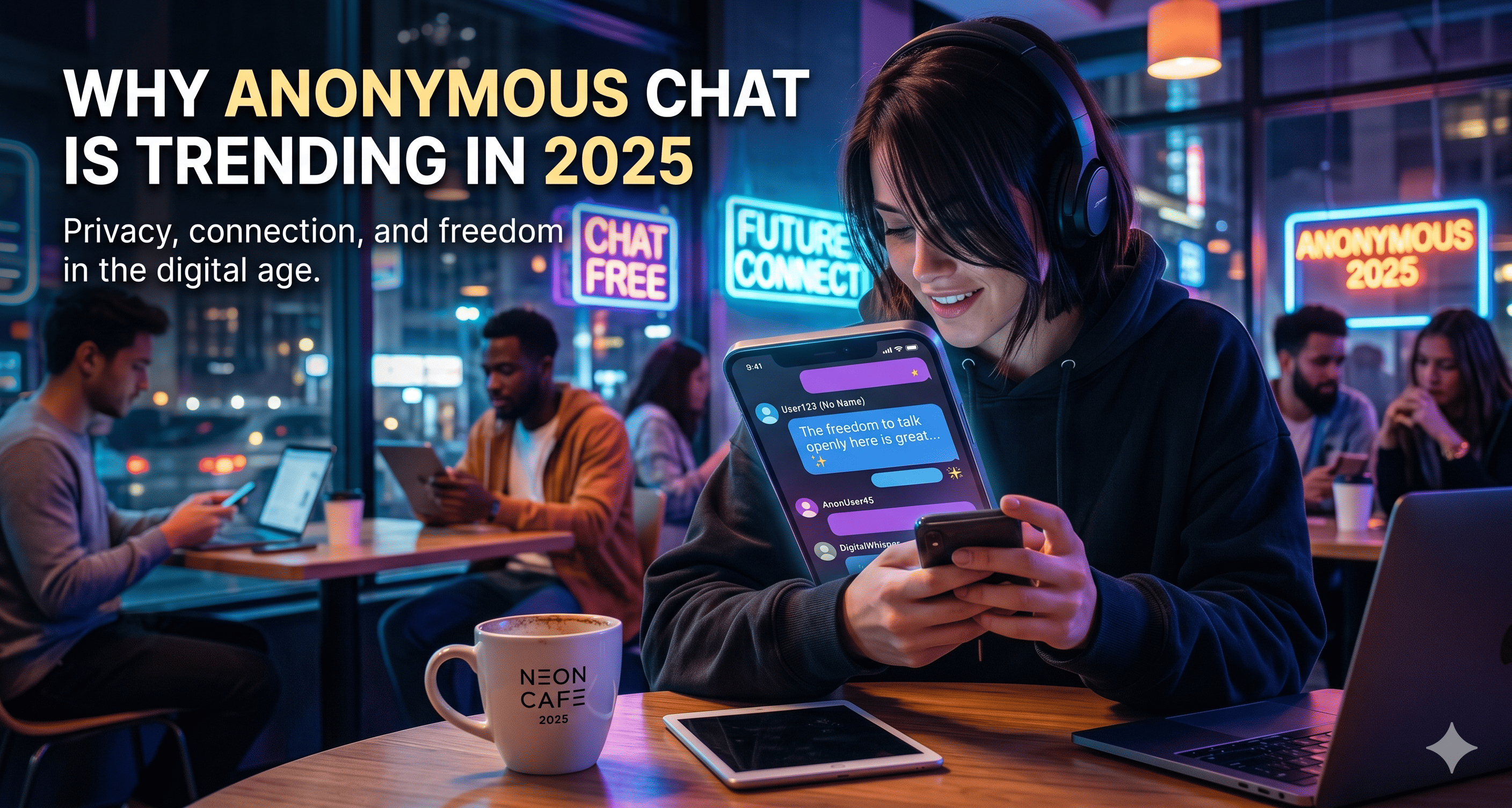
In the ever-evolving landscape of digital communication, 2025 has marked a significant paradigm shift. For over a decade, the internet was dominated by hyper-curated, identity-centric social media platforms. Users were encouraged—often forced—to tie their real names, faces, locations, and professional milestones to their digital avatars. However, as we navigate through 2025, a powerful counter-movement has taken center stage: the massive resurgence and trending popularity of anonymous chat platforms.
This is not merely a nostalgic return to the early days of the internet and the era of rudimentary chatrooms. Today’s anonymous chat platforms are sophisticated, lightning-fast, and deeply integrated with modern user needs. But what exactly is driving millions of users globally to ditch their curated profiles in favor of absolute anonymity? The answer lies in a complex intersection of social media fatigue, a growing demand for data privacy, the psychological need for judgment-free spaces, and incredible leaps in web application technology.
The Exhaustion of Curated Personas and Social Media Burnout
To understand the rise of anonymous chatting, we must first look at what users are running away from. Traditional social media has become an exhausting endeavor for many. Every post, picture, and comment is meticulously analyzed, optimized for algorithms, and permanently attached to a user's real-world identity. This environment has fostered a culture of comparison, anxiety, and digital burnout.
In 2025, users are experiencing profound "identity fatigue." They are tired of performing for an audience of peers, family members, and potential employers. Anonymous chat platforms offer the ultimate antidote to this exhaustion. By stripping away names, follower counts, and permanent profiles, these platforms allow individuals to simply be. When you remove the pressure of maintaining a personal brand, conversations become surprisingly more raw, honest, and engaging. Users can discuss niche interests, share fleeting thoughts, or simply engage in casual banter without the looming anxiety of how it affects their long-term digital footprint.
The Privacy Renaissance: Reclaiming Digital Footprints
Data privacy is no longer a niche concern reserved for tech enthusiasts; it is a mainstream demand. Over the past few years, highly publicized data breaches, aggressive targeted advertising, and the invasive tracking of user behavior have eroded public trust in major tech conglomerates. Users in 2025 are acutely aware that their data is a commodity.
Anonymous chat platforms align perfectly with this new era of the "Privacy Renaissance." Modern users are actively seeking out applications that do not require an email address, a phone number, or a linked social account to function. They want the ability to drop into a conversation and leave without a trace. Platform developers have recognized this, building systems that prioritize ephemeral data. Messages are often wiped from servers shortly after delivery, and user sessions are entirely decoupled from permanent identifiers. This guarantee of privacy is a massive draw for a global audience looking to communicate freely without the fear of algorithmic surveillance or corporate data harvesting.
Psychological Freedom and Judgment-Free Zones
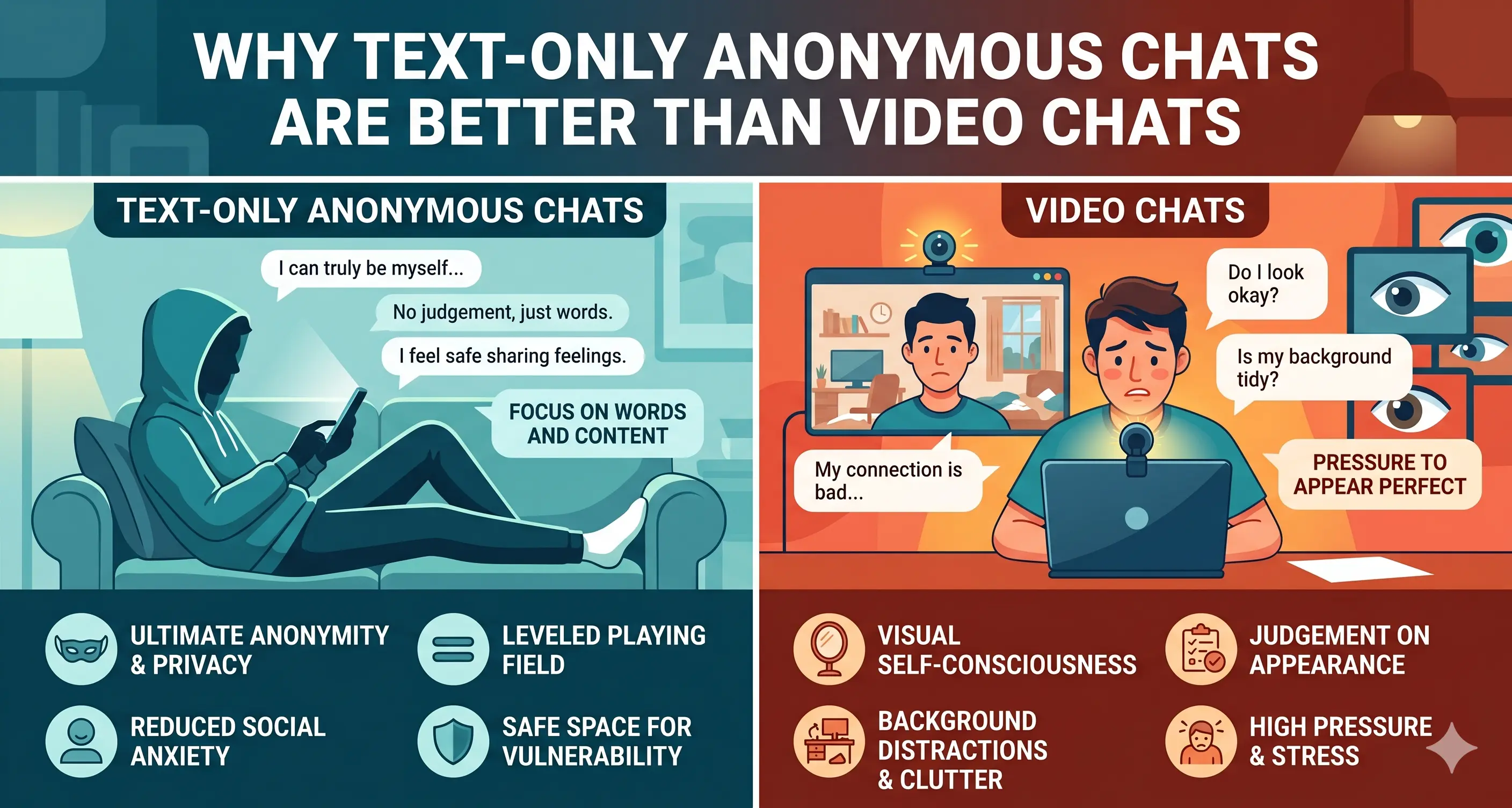
Beyond privacy from corporations, anonymous chat provides vital privacy from societal judgment. One of the most beautiful aspects of the 2025 anonymous chat trend is the creation of safe havens for mental health discussions, support groups, and vulnerable conversations.
It is incredibly difficult to admit to feelings of loneliness, stress, or confusion on a platform where all your friends and family are watching. Anonymous platforms act as a digital confessional. A user in Tokyo can share their anxieties with a stranger in London, finding solace in the fact that they will never meet, and therefore, cannot be judged in their real lives. This psychological freedom encourages a level of empathy and human connection that is ironically missing from "connected" social media. People are finding that talking to a complete stranger, who has no preconceived notions about who they are, can be profoundly therapeutic.
Breaking the Algorithmic Echo Chamber
Mainstream platforms use highly aggressive algorithms designed to feed users content they already agree with, creating insulated echo chambers. In 2025, internet users are becoming increasingly frustrated by this predictable, manipulated content feed. They crave the unpredictability of the open web.
Anonymous chat platforms—particularly those that pair users randomly or drop them into diverse global rooms—shatter these echo chambers entirely. You do not know the political affiliation, age, or background of the person on the other side of the screen until you start talking. This leads to organic, unexpected interactions that challenge perspectives and broaden horizons. It represents a return to the true magic of the internet: serendipitous discovery. Users are flocking to these platforms simply for the thrill of the unknown, engaging in spontaneous conversations that no algorithm could have predicted or orchestrated.
The Technological Evolution: Why Modern Anon Chat Actually Works
While the concept of anonymous chatting isn't new, the execution in 2025 is vastly superior to the platforms of the past. The current trend is heavily supported by massive leaps in web development and application architecture. Users today have zero tolerance for lag, slow loading times, or clunky user interfaces.
Modern developers are utilizing highly optimized tech stacks to deliver seamless experiences. Instead of bulky applications that take 8 to 10 seconds to load, today’s top anonymous platforms are highly performant, loading in mere seconds. This speed is crucial for capturing the fleeting attention span of a user who wants immediate connection.
Furthermore, media handling has evolved. Early anonymous chats were strictly text-based due to server constraints and the security risks of file sharing. Today, platforms have shifted from inefficient methods—like transmitting massive Base64 encoded strings—to secure, scalable, server-side file uploads. This allows users to share images and rich media instantly and safely, making the anonymous experience just as vibrant and feature-rich as mainstream messaging apps. Coupled with real-time socket connections for instant message delivery, the user experience is incredibly fluid.
AI Integration: Smarter, Safer Ecosystems
A historical criticism of anonymous chat platforms was the lack of moderation, which often led to toxic environments. However, 2025 has seen the successful integration of advanced Artificial Intelligence to solve this problem without compromising user anonymity.
Behind the scenes, lightweight AI models and smart algorithms act as silent moderators. They can detect and filter out malicious links, spam, and abusive language in milliseconds, ensuring that the platform remains a safe space for genuine interaction. Additionally, some platforms are utilizing AI to create engaging "personas" or chatbots that users can interact with when human traffic is low, ensuring the platform always feels alive and responsive. By automating moderation and enhancing engagement, developers have mitigated the largest risk factor associated with anonymity.
Organic Global Marketing and Borderless Communities
From a business and growth perspective, anonymous chat platforms are uniquely positioned to benefit from organic, borderless marketing. Because these apps do not rely on importing existing contact lists (like WhatsApp or iMessage), they grow through viral, global word-of-mouth.
In 2025, the most successful anonymous platforms leverage organic SEO and grassroots community building on global forums like Reddit, Telegram, and X (formerly Twitter). Because the appeal of "talking to anyone, anywhere, safely" is a universal human desire, a well-optimized platform can attract users from Indonesia to the United States without a massive paid advertising budget. The inherent mystery and utility of the platform drive organic shares. Users naturally recommend these sites to friends as a fun way to pass the time or meet people outside their immediate physical geography.
Conclusion: A Permanent Shift in Digital Culture
The explosion of anonymous chat in 2025 is not a fleeting trend; it is a direct and permanent recalibration of how we socialize online. It represents a collective pushback against the exhausted, heavily monitored, and algorithmic nature of the modern web.
People are inherently social creatures, but we also inherently desire privacy, spontaneity, and freedom from judgment. By leveraging modern, fast web architecture, secure media sharing, and intelligent moderation, the developers of today’s anonymous chat platforms have created environments that perfectly satisfy these needs. As we move further into the decade, it is clear that the future of digital connection isn't just about sharing who you are with the world—it is equally about the freedom to be nobody at all, and connecting with others who are doing exactly the same.