The internet is a vast, interconnected digital metropolis. Just like in any bustling city, you can meet fascinating people, learn about different cultures, and forge meaningful friendships. However, also like a physical city, the digital world has its dark alleys and dangerous characters. Chatting with strangers online can be a fun and rewarding experience, but it comes with inherent risks that require a proactive approach to personal security.
Whether you are using a gaming voice chat, a dedicated language exchange app, a dating platform, or anonymous chat rooms, the person on the other side of the screen remains a mystery until proven otherwise. Because people can easily hide behind fake avatars and fabricated personas, understanding how to navigate these interactions safely is absolutely essential.
This comprehensive guide will walk you through the fundamental rules, psychological tactics used by bad actors, and actionable steps you must take to protect your privacy, mental well-being, and physical safety while chatting with strangers on the internet.
1. Fiercely Protect Your Personally Identifiable Information (PII)
The most critical rule of online communication is to guard your personal data as if it were cash in your physical wallet. Personally Identifiable Information (PII) refers to any data that could potentially identify a specific individual.
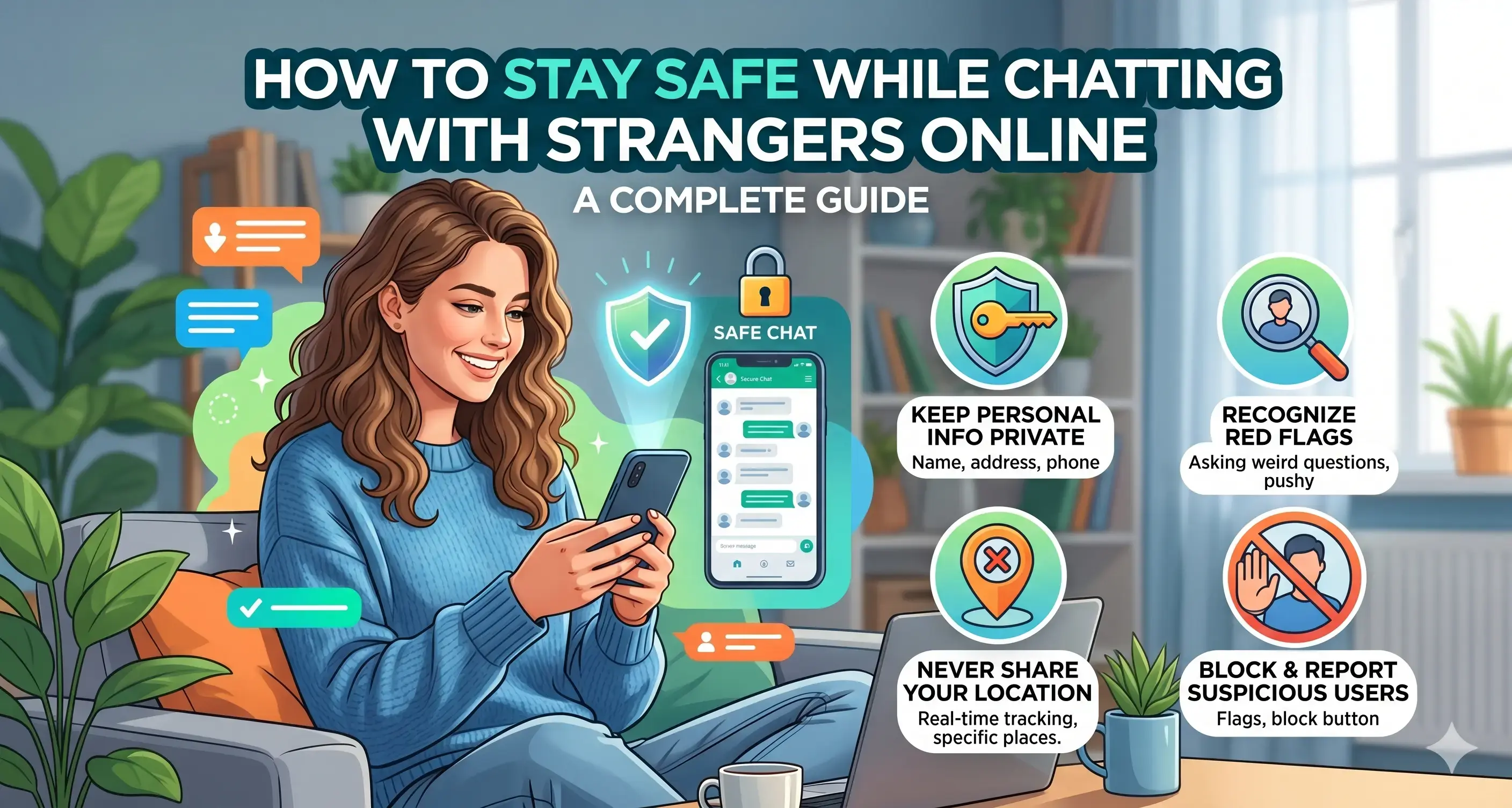
When you first start chatting with someone, keep the conversation focused on general topics: hobbies, movies, books, or the game you are currently playing. Under no circumstances should you reveal the following details:
Your full legal name: Stick to a nickname, gamer tag, or just your first name.
Your exact location: It is fine to say "I live in France" or "I'm from California," but never share your city, neighborhood, or street address.
Your workplace or school: Predators and stalkers can easily use this information to track your physical movements.
Contact details: Do not give out your personal phone number or private email address to someone you just met.
Financial information: Never share your banking details, credit card numbers, or crypto wallet addresses, regardless of the excuse they provide.
Important Note: Be mindful of "oversharing" through casual conversation. Mentioning that you just grabbed coffee at "that new Starbucks next to the central library downtown" gives away highly specific geographical data.
2. Understand and Manage Your Digital Footprint
Your digital footprint is the trail of data you leave behind while using the internet. Malicious actors are incredibly adept at piecing together seemingly harmless clues to figure out who you are.
Scrub Your Photos of Metadata
Did you know that the photos you take with your smartphone often contain EXIF data? This hidden metadata can include the exact GPS coordinates of where the picture was taken, the time, and the device used. Before sending a photo to a stranger, ensure you strip the location data from it, or take pictures directly within an app that automatically scrubs this data.
Beware of Background Clues
If you are video chatting or sending pictures, take a good look at your background. Are there letters with your address sitting on the desk? Can someone see the name of your high school on the jacket hanging on your chair? Can they identify the view out of your window? Always ensure your background is neutral and free of identifying markers.
3. Learn to Recognize the Red Flags
Scammers, hackers, and predators rely on manipulation. By recognizing their tactics early, you can shut down the conversation before any damage is done. Keep an eye out for these classic red flags:
Love Bombing: If a stranger starts declaring intense feelings for you, calling you "soulmate," or pushing for a serious romantic commitment within days or weeks of meeting, this is a major red flag. It is a manipulation tactic meant to make you emotionally dependent on them.
The Sob Story and the Ask: Romance scammers and financial fraudsters often invent elaborate, tragic stories. They might claim they are stuck in a foreign country, need money for a sudden medical emergency, or need a quick loan to fix their computer. Never send money, gift cards, or cryptocurrency to someone you have only met online.
Inconsistencies in Their Story: Liars struggle to keep their facts straight. If their age, occupation, or life history constantly changes, they are likely fabricating their persona.
Refusal to Video Call: If someone claims to be a 25-year-old model but vehemently refuses to do a quick live video call—or always claims their camera is broken—you are almost certainly dealing with a "catfish" (someone pretending to be someone else).
4. Never Share Compromising Media
One of the fastest-growing crimes on the internet is "sextortion." This occurs when a person is tricked or coerced into sending explicit photos or videos to a stranger online. Once the media is sent, the stranger reveals their true intentions and threatens to send the compromising material to the victim's family, friends, or employer unless a ransom is paid.
The Golden Rule: Never send a photo or video to a stranger that you would not want printed on the front page of your local newspaper.
Even if the person seems trustworthy, or they send you explicit photos first (which are often stolen from other sites), the risk is simply too high. Once a digital file leaves your device, you permanently lose control over who sees it, where it is posted, and how it is used.
5. Keep the Conversation on the Original Platform
When you meet someone on a dating app, a gaming forum, or a social media platform, the platform usually has built-in moderation tools, reporting systems, and a degree of anonymity.
A common tactic for scammers and predators is to quickly try to move the conversation off the platform. They will say things like, "I don't check this app often, let's move to WhatsApp," or "Let's talk on Telegram."
There are several reasons they do this:
To evade bans: If they violate the rules of the dating app or forum, they will get banned. By moving to an encrypted messaging app, they avoid the platform's security algorithms.
To get your number: Moving to apps like WhatsApp often requires sharing your personal phone number, giving them a direct line to you and revealing more of your identity.
Stay on the original platform until you have established a long-term foundation of absolute trust. If they pressure you to switch apps, consider it a warning sign.
6. Real-World Meetings: Proceed with Extreme Caution
Sometimes, an online connection blossoms into a genuine friendship or romance, and you decide to meet in person. Transitioning from the digital world to the physical world requires strict safety protocols. If you choose to meet a stranger from the internet, follow these non-negotiable rules:
Always Meet in Public: Choose a busy, well-lit public place like a popular coffee shop, a restaurant, or a museum. Never meet at their house, and do not invite them to yours.
Provide Your Own Transportation: Drive yourself, take public transit, or use a ride-sharing app. Do not let them pick you up or drop you off at your home, as you do not want them knowing where you live until you trust them entirely.
Tell a Trusted Friend: Inform at least one friend or family member exactly who you are meeting, where you are going, and what time you expect to be back.
Share Your Location: Use the location-sharing feature on your smartphone to let a trusted friend track your whereabouts during the date or meetup.
Set up a "Bailout" Call: Arrange for a friend to call you 30 minutes into the meeting. If the vibe is off, or you feel uncomfortable, you can use the call as an excuse to leave immediately (e.g., "I'm so sorry, my roommate just locked themselves out and I need to go help them").
7. Utilize Blocking and Reporting Features
You do not owe strangers on the internet your time, your politeness, or an explanation. If a conversation takes a turn that makes you feel uncomfortable, pressured, or threatened, exercise your right to disconnect.
Every reputable app, forum, and social media platform has tools designed to protect users. Do not hesitate to use them.
Remember that blocking someone is not rude; it is a vital boundary-setting tool for your digital peace of mind.
Conclusion
The internet is a magnificent tool for human connection, breaking down geographical borders and allowing us to find communities of like-minded individuals. However, the veil of anonymity that makes the internet so freeing also empowers individuals with malicious intent.
Staying safe while chatting with strangers online does not mean you have to be paranoid, but it does require you to be vigilant, educated, and protective of your personal boundaries. By fiercely guarding your personally identifiable information, recognizing the psychological tricks used by scammers, refusing to share compromising media, and prioritizing your physical safety during real-world meetups, you can navigate the digital world with confidence. Always trust your instincts—if something feels off, it usually is. Hit the block button, log off, and keep your digital life secure.